
What Happens to Your Roof on a 95° Greenville Day?

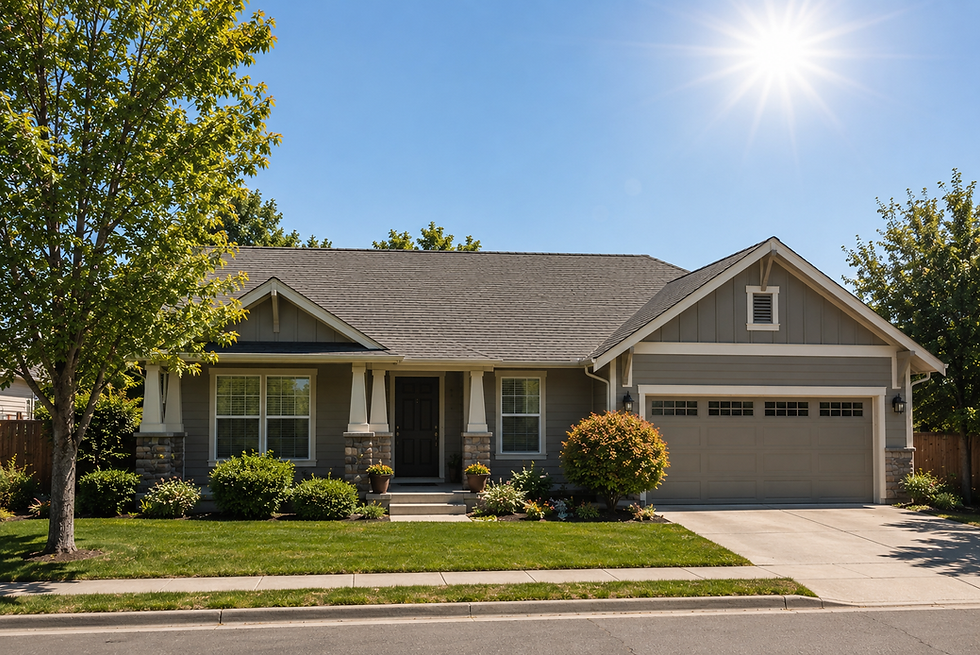
It’s mid-July in the Upstate. The weather app on your phone says 95°F with 80% humidity. To you, it just feels like a standard, sweltering South Carolina summer afternoon.
But to your roof, today is a high-stakes endurance test.
While your shingles look perfectly calm from the driveway, a silent, structural battle is raging from sunrise to sunset. Here is the hour-by-hour chronicle of exactly what happens to your roofing system on a typical July day in Greenville, revealing just how close it comes to a breaking point.
08:00 AM – The Morning Sauna
The Outside Temp: 79°F
The Roof Surface Temp: 90°F
What’s Happening: The sun is barely up, but the humidity is already thick. Overnight dew is evaporating off your asphalt shingles. However, if your roof lacks a balanced ventilation system, the moisture trapped inside your attic from yesterday has nowhere to go. It begins to cling to the wooden roof decking, creating a humid greenhouse beneath your feet.
01:00 PM – The Peak Bake
The Outside Temp: 94°F
The Roof Surface Temp: 150°F
What’s Happening: This is where physics takes over. Because dark asphalt shingles absorb radiant heat, your roof surface is now hot enough to fry an egg.
The Breaking Point: In poorly ventilated attics, temperatures soar past 140°F. This extreme heat cooks the shingles from the inside out. The oils in the asphalt begin to dry out, causing the shingles to become brittle. If moisture was trapped under the shingles from morning dew or early summer rains, it expands rapidly, creating hidden shingle blisters.
04:15 PM – The Afternoon Deluge
The Outside Temp: Drops to 75°F in minutes
The Roof Surface Temp: Plummets from 150°F to 80°F
What’s Happening: A classic Upstate afternoon thunderstorm rolls in over Paris Mountain. Within five minutes, the sky splits open and dumps two inches of torrential rain.
The Breaking Point: This sudden, violent temperature drop causes thermal shock. Your roofing materials, including the wooden deck, the metal flashing, and the asphalt shingles, all contract at drastically different speeds. Older, brittle shingles crack under the strain. At the same exact moment, a massive volume of water rushes into your gutters. If they are clogged with spring debris, the water backs up under the loosened edge shingles, finding a direct path to your drywall.
08:00 PM – The Steamy Hangover
The Outside Temp: 82°F
The Roof Surface Temp: 84°F
What’s Happening: The storm has passed, the sun is setting, but the air is thick. The water that forced its way under your shingles during the storm is now trapped. Without immediate airflow to dry it out, the wood rot process begins. Your AC unit is screaming upstairs, trying to fight the residual radiant heat still radiating from your attic floor.
The Post-Storm Inspection Checklist
You don't need to climb onto a slick roof after a July storm to see if the day took its toll. Walk your property and check for these three footprints left behind by thermal shock:
The Gutter Grit: Check the grass around your downspouts. If you see piles of dark, sandy granules, your shingles are actively shedding their UV protection due to heat stress.
The Ceiling Shadow: Check upstairs ceilings for faint, tea-colored rings, paying close attention to the areas around light fixtures and exhaust fans. July leaks often start as tiny drops that soak insulation before ever dripping onto your floor.
The Roof Line Sag: Step across the street and look at your roof ridge. Does it look perfectly straight, or are there slight waves? July heat warps compromised wooden decking, creating a wavy silhouette.
The Bottom Line
Your roof is designed to handle South Carolina summers, but it relies on ventilation to survive them. If your attic can't breathe, your shingles can't protect.
If your upper floors are feeling the heat or your downspouts are filling with shingle grit, our local team is here to help. Reach out to us for a free professional inspection before the next afternoon deluge strikes.

Comments